
Basement Waterproofing Tips -The Ultimate 2026 Guide to a Dry, Mould-Free Home
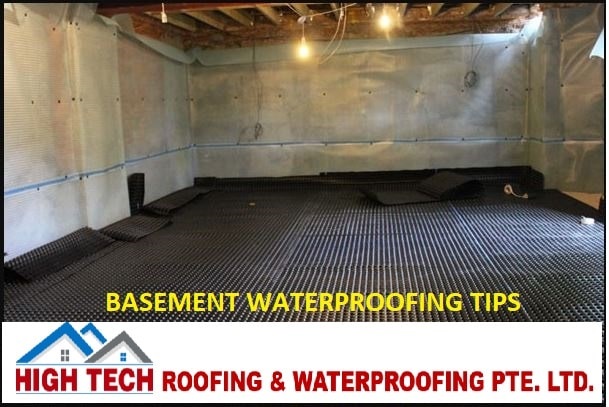
Having a basement in Singapore is a luxury, but it often comes with a persistent headache: tropical dampness. If you’ve ever walked downstairs to that heavy, musty smell or noticed dark patches on your walls after a monsoon downpour, you aren’t alone. In our humid climate, where the water table is high and rainfall is intense, basement waterproofing isn't just an "add-on"—it’s a structural necessity.
At High Tech Roofing & Waterproofing, we believe in a "supportive expert" approach. We’ve seen many homeowners in landed properties struggle with recurring seepage because they only treated the symptoms and not the cause. This guide will walk you through the most effective, modern methods to keep your basement dry, including our signature No-Hacking solutions that save you time and mess. Ref: BCA Guide
Why Basements in Singapore Struggle with Water
Before jumping into the fixes, it's important to understand why basements here are prone to leaking. Unlike roofs, where gravity helps water run off, basements are surrounded by soil. In Singapore, this soil often becomes saturated during heavy rain, creating hydrostatic pressure.
This pressure pushes water through the tiniest hairline cracks in your concrete walls or floor. Furthermore, the high humidity levels (often above 80%) mean that any small leak quickly turns into a breeding ground for mould and mildew. If left untreated, this can compromise the structural integrity of your home and the health of your family.
1. The "No-Hacking" Revolution: PU Injection
Traditionally, fixing a basement leak meant hacking up the floor or digging up the garden outside to reach the foundation. This is noisy, dusty, and expensive.
As a leading Waterproofing Specialist in Singapore, we prioritize No-Hacking PU (Polyurethane) Injection. * How it works: We drill tiny, strategic holes into the wall or floor where the leak is occurring. We then inject a specialized PU resin that reacts with water to expand and turn into a dense, flexible foam. * The Result: The foam fills every void and crack, creating a permanent, waterproof seal deep inside the concrete. It's fast, clean, and incredibly effective for active seepages.
2. External Drainage Management (Gutter & Downspouts)
Sometimes, the water in your basement is there because of a problem above ground. If your roof gutters or downspouts are clogged or pointing toward your foundation, you are essentially pouring water directly into your basement walls.
- Tip: Regularly clear debris from your gutters, especially before the monsoon seasons (November–January and June–September). Ensure your downspouts discharge water at least 2 metres away from the house foundation to reduce soil saturation.
3. Negative Side Waterproofing (Cementitious Coatings)
If you cannot access the outside of your basement wall (which is common in terrace houses), we apply a Negative Side Waterproofing system. This involves applying high-performance cementitious coatings or crystalline waterproofing agents to the inside of the wall.
These materials are designed to withstand hydrostatic pressure from the outside. They penetrate the concrete and form crystals that block the pores, preventing water molecules from passing through while still allowing the wall to "breathe" slightly to prevent pressure build-up.
4. Humidity Control: The Role of Dehumidifiers
Even if you don’t have a visible "leak," your basement can still feel damp due to condensation. Because basement walls stay cooler than the humid Singapore air, water droplets can form on the surface—just like a cold glass of water.
- Supportive Advice: Investing in a high-capacity industrial dehumidifier is essential for any Singapore basement. Maintaining a relative humidity (RH) of 50-60% will stop mould from growing and protect your furniture and electronic equipment.
5. Sump Pump Installation and Maintenance
For basements that sit below the local water table, a sump pump is your last line of defence. It collects water that accumulates in a "sump pit" and pumps it out of the building.
- Maintenance Check: Don't wait for a flood to find out your pump is broken. Test it once a month by pouring a bucket of water into the pit to ensure the float switch triggers the motor. Consider a battery backup system in case of power outages during a storm.
6. Dealing with Wall Cracks: Epoxy vs. PU
Not all cracks are created equal. If you notice a thin, dry crack that hasn’t leaked yet, an Epoxy Injection can be used to bond the concrete back together and restore structural strength. However, if the crack is wet or likely to move due to thermal expansion, our No-Hacking PU Injection is the safer, more flexible choice.
7. Strategic Landscaping
The "slope" of your garden matters. If the ground around your home slopes toward the house, rainwater will naturally pool against the basement walls.
- Expert Tip: Grade the soil so it slopes away from the foundation at a rate of at least 1 inch per foot for the first 6 to 10 feet. This simple landscaping fix can reduce the "workload" on your waterproofing system by up to 50%.
8. Ventilation and Airflow
Stagnant air is a basement’s enemy. Without airflow, moisture stays trapped, leading to that classic musty smell. If your basement has windows, keep them open during dry days. If it’s an underground bunker, ensure your mechanical ventilation system (exhaust fans) is running at least a few hours a day to cycle the air.
9. Waterproof Flooring Choices
If you are finishing or renovating your basement, stay away from carpet or real hardwood. These materials absorb moisture and rot quickly. Instead, opt for: * Luxury Vinyl Planks (LVP): 100% waterproof and looks like wood. * Epoxy Floor Coatings: Extremely durable and creates a seamless barrier over the slab. * Ceramic or Porcelain Tiles: Classic, easy to clean, and naturally moisture-resistant.
10. Regular Professional Inspections
Waterproofing is not a "set and forget" task. Over time, the soil shifts, and materials age. A professional inspection from a BCA Registered Roofing and Waterproofing Contractor can catch a hairline crack before it becomes a flooded room. At High Tech Roofing, we use thermal imaging and moisture meters to find "hidden" water that hasn't reached the surface yet.
Frequently Asked Questions (FAQ)
Q: Can I waterproof my basement from the inside? A: Yes! While external waterproofing is ideal, it is often impossible for existing homes in Singapore. Internal "Negative Side" treatments and PU injections are highly effective "No-Hacking" alternatives.
Q: How do I know if my basement has mould? A: Look for fuzzy white, green, or black patches on walls or organic items (like cardboard boxes). If you smell a persistent "earthy" or "stale" odour even after cleaning, you likely have mould growing behind the drywall or under the floor.
Q: Is the No-Hacking PU Injection permanent? A: PU resins are designed to be extremely durable. While no solution lasts "forever" against the earth's movement, a professional injection can last 10-15 years or more.
Q: Why choose High Tech Roofing for basement works? A: We are supportive experts who understand the Singaporean landscape. We focus on durable, non-invasive solutions like No-Hacking chemical infusions to save you from the stress of a major renovation.
Technical Schema Implementation
Copy and paste these <script> tags into your webpage to ensure Google recognizes your site as a high-authority resource for Singapore waterproofing.